Friday, May 16, 2008

municipal broadband

Vint Cerf supports municipal broadband networks | Nancy Gohring | IDG News Service 5/12/08


Municipal broadband networks could help boost the availability of high-speed Internet access and even help to ensure Net neutrality in the U.S., said Vint Cerf, vice president and chief Internet evangelist at Google.

(...)

Some operators also talk about the capacity of the Internet backbone itself. "As for running out of capacity, we've barely touched the surface of the fiber capacity. We are far from having exhausted this capacity," he said.

Operators may simply not want to invest in their networks to bring higher bandwidth to users, he said. "That comes back to the municipal argument. Citizens that want the capacity should be able to decide among themselves to put the resources in place to get that kind of capacity," he said.

Some operators contend that municipal networks create competition between the government and private companies. "That's nonsense," Cerf said. Governments would contract with the private sector to build the network and maybe even operate it, he said, so the two would be partners. In Tacoma the city maintains the network, but other companies serve as ISPs (Internet service providers), selling access to end-users.

Wednesday, May 14, 2008

Ofcom - Tomorrow’s Wireless World

[1] Ofcom | 07|05|08 | News Release | Tomorrow’s Wireless World

New technology in cars to help avoid collisions; wireless devices to remind patients to take medication; wireless food content scanners to change the way we shop …these are just some of the new technologies that are highlighted in Ofcom’s 2008 technology research report published today.

Tomorrow’s Wireless World scans the horizon ten to twenty years in the future to discover potentially significant advances and new, innovative technologies which are being developed that could improve healthcare and transport provision.

Wireless devices are now an essential part of our everyday lives. As well as transport and healthcare, wireless communications are essential to defence, education, entertainment, culture and commerce. Wireless communications are so integral to our lives that today there are more mobile subscriptions, at 70 million, than the 60 million UK population.

Ofcom’s role is to ensure the most efficient use of the UK’s radio frequencies – or spectrum – that these services use. Spectrum is a finite resource; Ofcom’s technology research helps it to better understand how this precious resource might be used in the future and allows it to plan how we manage the spectrum to meet these demands.

New technology in the healthcare sector

The report highlights a number of innovative technologies in the healthcare sector which could be available for use within the next ten to twenty years:

(...)


[2] Tomorrow's Wireless World - Executive Summary

Excerpts:

Foreword

Welcome to this, Ofcom’s third report on our Technology Research Programme. This report and our annual Technology Research Symposium are excellent opportunities for us to disseminate the key outcomes of our work to stakeholders. In previous years, our activities have been influenced by the requirement for us to undertake research under the Spectrum Efficiency Scheme. The work detailed in this report, however, marks a move towards diversifying the technology research conducted within Ofcom, to better reflect the breadth of our regulatory duties.

Wireless and spectrum-related research is, naturally, still a vital part of our programme. However, this year we have also undertaken a research project investigating capacity limits of the copper network used to deliver broadband to the majority of homes in the UK. We have also undertaken two large studies into telecommunications trends within two important sectors of society; healthcare and transportation. The research programme planned for the coming year also reflects this diversification.

(...)


Key findings

Technology within the information and communication technologies sector continues to develop rapidly and continually open new opportunities. Breakthroughs leading to fundamental shifts in the underlying science are rare. Continuous development is more common and can be just as valuable in the evolution of services and applications.

Last year, we concluded that a breakthrough in communication technologies was unlikely within the next 10 years. Further horizon scanning, through our Technology Watch programme, leads us to make the same comment this year. This has great importance to a number of our policies, such as decisions as to whether to set spectrum aside for an “innovation reserve” – based on the conclusions here such an approach would be inappropriate. However, given a typical 10 year time lag from research to commercial deployment, continued monitoring of the technology horizon is prudent.

Breakthroughs aside, we note that the general pace of technology advancement, both within industry and academia, is very strong indeed. Wireless sensor networks are moving from the military to the civilian domain, attracting a significant amount of interest within the research community. However, their widespread deployment is still some way off and we conclude that no additional spectrum or regulation is necessary at this time. In the wired domain, the technologies underpinning copper telephone networks may progressively be enhanced to achieve higher data rates.

The sectoral studies into the health and transport sectors show that application of new and emerging technologies could have a major effect on the way we live our lives and the services that are delivered. Simply applying cellular communications, GPS positioning and short-range wireless to the car, for example, could revolutionise the way we conduct our journeys and safety levels on the roads. These studies make it clear that developing a new technology is generally simpler than introducing it into commercial use, especially where there are a number of inter-related parties or where Government plays a key role. Indeed, it is clear that delivering these services will require Government intervention and our studies have suggested that there may be a need within relevant Government departments for a team to identify and lead the delivery of these projects.

Overall, the research reported here suggests that no major changes to our regulatory policies are needed at this time. There may be a requirement to help identify incremental spectrum allocations, predominantly for licence-exempt usage, and copper networks may provide data rates that can compare with those currently being deployed in cabled systems. However, no dramatic changes requiring the review of regulation are presently foreseen.


(...)


Research into technologies

Ofcom has undertaken research into a number of new and emerging technologies in order to understand their potential, gauge whether regulatory change is needed and further their development where appropriate.

Dynamic spectrum access (DSA) describes a concept that enables a user (or, more likely, their handset) to receive up-to-date quality of service information relating to wireless communications networks. They can then use that information to communicate in the most effective (i.e. cheapest, fastest, highest quality etc.) way. We have previously reported on a candidate architecture to support DSA. We have now concluded that the DSA architecture is viable, as simulations have shown that there is a minimal increase in signalling overhead and that proposed dynamic pricing algorithms are stable. The prospects for the introduction of DSA rest mainly on the identification of a suitable business case.

In the UK, broadband penetration has increased dramatically over the last six years from 7% in 2002 to 57% in Q4 2007, driven in part by fierce competition amongst local loop unbundlers (LLUOs): almost 80% of these broadband connections are delivered across the copper local loop with the rest over cable. Consumers are benefiting from the choice that infrastructure competition is delivering and they appear relatively happy with the headline broadband speeds – if discontented when the reality does not meet the headline. Whilst there are no definitive indications of whether consumers will want significantly higher speeds, we are seeing evidence of increasing use of IPTV and other bandwidth hungry audio visual applications. This begs the question of when the current copper network would be unlikely to meet the expectations of the majority of UK consumers.

In practice, the answer to this question depends not only on the types of services consumers require but how technologies evolve: it is difficult to predict either accurately as there are many factors which effect both. To give some insight, we commissioned a study based on an idealised environment that does not reflect all the complexities of the current underlying network. This abstraction enabled us consider the theoretical capacity limits of copper networks and set an upper bound for broadband data rates that could be achievable across copper. Given the important relationship of distance to data rate, we based our model on information on cable lengths from a real network. We concluded that, in our idealised environment, capacities can further improve, compared to today’s deployments. We found that if the upstream modem is hosted in the exchange, households within 2km of the exchange (approximately 18% of the total number of households) could, in theory, receive data rates above 50Mbit/s. If the upstream modem is moved closer to the customer premises and into the street cabinet, then almost 100% of households are within 2km of the street cabinet and could, theoretically, expect a data rate of 50Mbit/s.

These results are theoretical and do not reflect what could be achieved in practise. Data rates experienced by end users depend not only on the distance between the customer premises and the exchange but also on home wiring and interference at the exchange, cabinet and in the home. In the real world there are different providers with different equipment sharing the exchange, and perhaps the cabinet, and therefore impacting performance. Nevertheless the real value of this study is to suggest an upper limit, given all technical progress possible, of 50Mbits, with fibre to the cabinet.

Wireless sensor networks are receiving an increasing amount of attention in the research community. Networks of sensors could be a fundamental technology to underpin some of the future applications discussed within the healthcare and transport sectors. They could be used, for example, to monitor the vital signs of a patient or construct a road safety system. We conducted a study to understand the key enablers of, and barriers to, the deployment of sensor systems and to estimate their likely spectrum requirements. We observed that the technologies are maturing and an increasing number of industry players are devoting their attentions to applications, rather than just on component sensor technologies. The benefits to the consumer or citizen will become increasingly clear as these applications are identified. However, we concluded that there is unlikely to be a major demand on spectrum, given predicted future deployments. We also concluded that there is no evident killer application at present.


Better management of the radio spectrum

One of Ofcom’s major responsibilities is the management of the radio spectrum. Better spectrum management leads to more efficient utilisation and an increase in value for all stakeholders. The consumer, increasingly dependent on wireless and mobile communications, also indirectly benefits from our work in this area. By improving our knowledge of how various parts of the spectrum are actually used we can take steps to ensure that the services to which they subscribe meet the standards of quality they expect – and have paid for. This year our work was divided into three areas – enhancing our understanding of propagation, examining whether certain applications can be moved to higher frequency bands and providing better information about spectrum usage.

Enhancing our understanding of propagation. There is an ongoing need to extend our expertise in understanding radio propagation, for example, to assist our new licensing approach of Spectrum Usage Rights (SURs) which relies on accurate underlying models for verification. We also need to understand better the effect of new network topographies, for which little propagation data exists:

  • Despite the increasing use of wireless systems in and around buildings, there is no widely accepted model for radio propagation involving the passing into or out of buildings. We commissioned a study to produce a model suitable for regulatory purposes. Data generated by the model produced a wealth of useful information.
  • Wind farms have been proposed as an ecologically sound method to generate electricity. However, concerns have been raised about the effects of wind farms on radio communications systems. We have commissioned a measurement study to better understand the effects of wind farms on fixed link and scanning telemetry systems. This report discusses the relevant interference effects and the approach of the measurement campaign. We will report on the outcomes of the measurement campaign in the next annual technology research report.
  • Ofcom has previously commissioned a Generic Radio Modelling Tool (GRMT), which can undertake assessment of the potential for interference in a liberalised spectrum environment. During this year the GRMT has been further developed, including the ability to undertake a technical examination of whether a new or changed licence application should be approved.
  • The increasing use of “micro-cells” in mobile radio systems and the possible extensive use of mesh networks highlighted a need for a general-purpose propagation model appropriate for making coverage and interference predictions where both terminals in a link are at low height. We have previously commissioned a measurement campaign to enable us to better understand this propagation environment. The results obtained in this reporting period highlighted the limitations of existing, accepted models that have not explicitly been developed for such environments.

Applications moving to higher frequency bands. Market mechanisms tend to move many applications to ever higher frequencies but may not always be effective in demonstrating what is possible. As a result, we conducted work on selected applications to understand the potential for their use of higher frequencies.

If greater use of fixed links in the bands above 60GHz could occur then this would provide a useful increase in the spectrum available for new services at lower frequencies. We commissioned research into the feasibility of combined millimetre wave and free space optical communications links for use in place of lower frequency fixed links. Our trial demonstrated the robustness of these combined links in the presence of various weather conditions, with over 99% availability.

Wireless television cameras are already used extensively for electronic news gathering and outside broadcast purposes and their usage is growing. Their usage is particularly applicable for sporting events, such as the Olympic Games. Existing cameras operate in highly desirable spectrum that might alternatively be used for mobile applications. We commissioned research to examine the feasibility of moving wireless cameras to a higher frequency of operation. We concluded that operation at 7.5GHz is feasible but the propagation characteristics of 60GHz spectrum means that this frequency is only suited for line of sight applications.

Providing better information about spectrum usage. In the same way that it is difficult to manage a company without management information, it is difficult to manage the spectrum well without information on its usage and quality. Ofcom has previously commissioned the development of the Autonomous Interference Monitoring System (AIMS), a multi-functional tool for monitoring the quality of spectrum. Since we last reported we have conducted an extensive field measurement campaign, including:

  • A study of licence exempt band utilisation, and;
  • Measurement of the characteristics of man-made noise, the outcomes of which have been submitted to ITU-R.

The coming year’s research

Over the past six months, we have consulted widely, both within Ofcom and externally, on suitable topics for the 2008/09 research programme. At the time of writing, eight projects have started:

Estimating the value of spectrum. An increasing amount of spectrum is allocated through market-driven approaches. However, this requires a good understanding of the real value of the offered spectrum. This project may assist trading markets by setting price expectations appropriately and help those who are interested in acquiring spectrum in understanding the likely amount that they might have to pay. We are proposing a study that will build a model that will enable us to estimate value across as much of the UK spectrum allocation as possible. The model will take a number of factors into account, such as the frequency and bandwidth, and will provide important information to drive the spectrum marketplace.

Capture of spectrum utilisation information using moving vehicles. The use of spectrum in different parts of the country and across different frequency bands can vary quite dramatically. It is important that we are aware of such variations to enable us, for example, to determine whether additional licence exempt spectrum is needed or to build up a better picture of local interference. We propose to investigate a system comprising a number of vehicle-mounted nodes. Measurements would be taken as the vehicle moved, with the data stored locally until such time that it could conveniently be uploaded to a central database. Over a period of time the database will grow, building a detailed picture of spectrum use in key frequency bands across much of the country.

Socio-economic study of the entertainment sector. Entertainment within and to the home is undoubtedly an enormous market. We anticipate that the manner in which video and audio is distributed, stored and subsequently consumed will have a major impact on the underlying communications infrastructure. We are proposing a study that will enable us to assess the changing entertainment sector in order to determine the impact on the regulatory environment. The study will develop scenarios describing a view of the future entertainment sector over periods of 10 and 20 years. These scenarios will then be examined to determine the technological developments required and the likely impact on spectrum and network demands.

Quality of service on the Internet and the implications for IPTV and other services. The entertainment study discussed above will address an entire sector of society and will therefore be broad in scope. We are also proposing to conduct a narrower study that specifically investigates the technological and economic barriers to providing high quality television services over the Internet (known as Internet Protocol Television, or IPTV). One of the major reasons for poor quality of service over the Internet is congestion, i.e. too much data being carried at the same time, leading to some data being lost or severely delayed. In this study, we will seek to understand the various reasons why congestion occurs, the impact it has and whether we can take any regulatory measures to improve the situation.

Estimating the use of key licence-exempt spectrum. Licence-exempt spectrum is important for delivering applications that generate significant consumer value, such as Bluetooth and WiFi. However, as the number of devices that support these technologies increases, so does the possibility of congestion, which can lead to degradation in quality or performance. Understanding the actual levels of congestion and the associated trends will assist us in making better-informed spectrum management decisions. Unfortunately, getting a good understanding of congestion is very difficult – congestion may only occur in a small area, such as in the centre of a shopping centre but not at the periphery, or it may only occur at certain peak periods of the day. We propose a study to seek out congested areas and measure levels of congestion.

Understanding the environmental impact of communications systems. Communications systems in general might have two different environmental effects. On the one hand, transmitters and receivers consume energy and building mast sites can involve substantial activity and affect the landscape. On the other hand, effective communications, such as video conferencing, might save journeys and hence have a positive environmental impact. We propose to conduct a study to assess the relative energy consumption and environmental impact of a range of different networks as well as understanding how the benefits might vary according to network type.

Predicting areas of spectrum shortage. There is a long-term view of spectrum use, in which networks are efficiently deployed in all places and at all times and there is sufficient spectrum available for a variety of demanding services. However, as we move towards that situation, the demand for spectrum may grow more quickly than the available supply. Hence, in the interim there may be areas of spectrum shortage, which may lead to poor coverage, dropped calls or low data rates. We propose a study that will enable us to model both spectrum demand and the ability of networks to respond to that demand. Potential areas of spectrum shortage can therefore be identified and, if necessary, regulatory action planned.

Wide-range propagation model. Propagation tools are vital to understand the physical environment in which wireless and mobile systems operate. However, it is becoming apparent that existing propagation methods and tools will require updating, as use of the radio spectrum becomes more innovative and liberalised. We propose a study to develop a new model that will predict coverage and interference between radio networks operating in a liberalised spectrum environment.

(...)


Ofcom research - Sector Studies

Further to publication of its annual Technology Research and Development Report, Tomorrow’s Wireless World, on 7 May 2008, Ofcom today published independent reports providing details of the specific healthcare projects:


Ofcom has undertaken research to examine particular sectors of society to predict the likely evolution of communications technology. We can use this information to assess whether there are any regulatory actions required to assist and stimulate development. We select sectors that have particularly strong drivers for change in their use of communications and where the possibility exists for substantial benefits to citizens and consumers.


EarthLink Ends Philly Wi-Fi

wi-fiplanet.com | By Naomi Graychase | May 13, 2008

EathLink’s Wi-Fi customers in Philadelphia received news today that their Wi-Fi service is coming to an end. The former leader in municipal Wi-Fi deployments will provide its customers with a thirty-day transition period through June 12, 2008, after which point it intends to dismantle the network and remove its equipment.

The city has known for several months that EarthLink intended to leave. The Atlanta-based ISP had sought a buyer for the network, and plans were also in the works for a non-profit organization to take over management of the Wi-Fi network, valued by EarthLink at $17 million. In addition to handing over the existing network free of charge, EarthLink had reportedly also offered to make a substantial cash contribution and to donate new Wi-Fi equipment—as it did in Corpus Christi, TX—but, an agreement between the city, the non-profit, and Wireless Philadelphia was not reached in time to satisfy EarthLink’s desire to cut its losses and move on.

(...)

Thursday, April 24, 2008

THE EXPLORATIONS SERIES


The Explorations series
explores the permanent collections of the Newport Museum and Art Gallery. Each project showcases rarely seen works belonging to the permanent collections of the Newport Museum and Art Gallery, and provides
an opportunity for enjoyment, reflection and further conversation.

Each project in the Explorations series has been produced by John Wilson as Guest Curator, in collaboration with Roger Cucksey, Keeper of Art, Newport Museum and Art Gallery.


The Newport collections: Artists, genre, and the history of art

The Explorations series provides a frame to explore the permanent collections of the Newport Museum and Art Gallery, and address particular themes across the diverse range of artists, genre and moments in the history of art.


Commencing with THE POETICS OF PLACE, we collated art works representing the South Wales urban-industrial scene. The iconography of the coalfield was the hallmark of a populist cultural formation in the immediate post-45 period. This phase of painting of the Welsh industrial landscape stands as a counterpart to the earlier cultural achievement of the Welsh industrial novel.

THE ART OF COLLECTING provides a public airing of works by some of the better known artists in the Newport Museum and Art Gallery's collections, and an opportunity to reflect upon the formation of the Newport collections and the future of collecting in a changing world of art.

THE ART OF THE NUDE frames the artistic genre of the nude and provides a fascinating thread through the history of art. The study of the nude formed the basis of the post-Renaissance academic tradition of "Western Art", whilst the departures of modernism and the avant garde likewise saw a peristence of the nude as a vital genre for the artist's exploration. Whither the nude in today's world of CGI and the Internet?

In this process of art historical enquiry we may engage cultural critic Raymond Williams' revisionist challenge, When Was Modernism, to provide a historical redress to "the neglected works left in the wide margin of the century". We also engage the challenge of culture and the public sphere, to open up wider conversation around works in the permanent collections of the Newport Museum and Art Gallery. With a continued dis-articulation of the civic context and the art college as an institution at present, we seek to open up a wider public discourse. We also note the opportunity for a public art strategy to emerge in response to the City of Newport's current regeneration agenda, as well as talk of a Newport riverside locus for a Welsh Institute of Modern Art.


chartistnewport.org

chartistnewport.org - a place for recording Chartist commemoration activities in Newport and South Wales. | John Wilson, 2008

Chartist Calendar 2008

- What's on in South Wales - Chartist conferences, lectures, workshops & walks

Sign the DEMOCRACY DAY PETITION here

DEMOCRACY DAY PETITION | 10 DOWNING STREET

We advocate an annual Democracy Day public holiday on the Monday nearest to the 4th of November, in commemoration of the Newport Chartist Rising of 4th November 1839 when more than 20 men were killed whilst demanding the right to vote.


Our proposed date recalls three pioneering movements in the development of British democracy:

  • The 'Putney Debates' of 28th October to 9th November 1647, when the case for male suffrage was publicly formulated for the first time in British history.
  • The demands of the People's Charter of 1838 which have become the foundation of parliamentary democracy in Britain.
  • The cause of the Women's Suffrage Movement is remembered with the foundation of the Women's Social and Political Union in October 1903, and the events of Black Friday in November 1910 when suffragettes demonstrating outside Parliament were attacked and arrested by the authorities.

As outlined in the Early Day Motion Number 8 that was laid before Parliament on 6th November 2007, we call for this additional public holiday to remember the courage and vision of past generations and the challenge of building democracy today.

THE ART OF THE NUDE

THE ART OF THE NUDE


ARTISTS EXPLORE THE HUMAN FORM

An exhibition of drawings, prints, painting and sculpture

John Wilson and Roger Cucksey, Guest Curators

Newport Museum and Art Gallery | 2008


THE ART OF THE NUDE frames the artistic genre of the nude and provides a public airing of rarely seen works belonging to the permanent collections of the Newport Museum and Art Gallery.

"Art can never exist without naked beauty displayed" - William Blake

"The body always expresses the spirit whose envelope it is. And for him who can see, the nude offers the richest meaning" - Auguste Rodin

"I was trained as a painter. I'm very familiar with the nude body, masculine and feminine. I do, I suppose have a soapbox position, and I want to be certain that the human body is in the center of the frame." - Peter Greenaway, Film-maker


THE ART OF THE NUDE frames the artistic genre of the nude and provides a fascinating thread through the history of art. The study of the nude formed the basis of the post-Renaissance academic tradition of "Western Art", whilst the departures of modernism and the avant garde likewise saw a peristence of the nude as a vital genre for the artist's exploration. Whither the nude in today's world of CGI and the Internet?


Our selection brings together a diverse body of works with a lively conception of the subject of the nude. The large-scale exhibition of 85 works - 28 drawings, 12 prints, 39 paintings and 6 works of sculpture - includes the following prominent artists: Auguste Rodin, Henry Gaudier-Brzeska, William Blake, Sir Edward J. Poynter, Sir Gerald Kelly, Sir William Russell Flint R.A, Peter Blake, Allen Jones, Sir William Goscombe John R.A. , Ceri Richards, Merlyn Evans, Thomas Rathmell, Harry Holland, Angelica Kauffman R.A, Dame Laura Knight R.A. , Elinor Bellingham-Smith and Gerda Roper.

We may reflect upon:

  • the central place of the nude in the history of art

  • the nude as a highly productive genre for the artist's exploration

  • the sometimes controversial role of the nude as a mediator of aesthetic taste and cultural mores across the generations


THE ART OF THE NUDE is the third project in the Explorations series, which provides a frame to explore the diverse range of artists, genre and art historical periods represented in the Newport Museum and Art Gallery collections.

ONLINE RESOURCES

  • video clip - the exhibition selection process


.

Thursday, January 31, 2008

Ofcom - public spectrum trading


ofcom | 31|01|08 | Freeing up the valuable public spectrum

Government, its agencies and other public organisations including the Ministry of Defence (MoD) will be able to share, trade or release their considerable radio spectrum holdings under new plans announced by Ofcom.

Ofcom expects the arrangements to free up some of the most valuable spectrum for new wireless services for the benefit of citizens and consumers. This will enable the key public users such as the MoD to trade their spectrum holdings and acquire new spectrum in the market.

Public bodies use around half of the radio spectrum below 15 GHz – the most sought after and congested frequencies. An independent study published in 2005 estimated that the spectrum held by the public sector could have a market value of between £3bn and over £20bn.

The news is of particular significance to the MoD which holds about a third of the most sought-after public sector spectrum. The MoD has already committed to sharing and releasing a significant proportion of its spectrum holdings and plans to consult on proposals in May 2008.

Ofcom will enable public spectrum trading by issuing new regulations and aims to consult on them in the summer. The Government will take responsibility to ensure that in trading and releasing public spectrum, defence, national security and public safety remains paramount.

Ed Richards, Chief Executive of Ofcom, said: “Public bodies and the MoD in particular hold some of the most valuable and sought-after radio spectrum. By working with these organisations we are enabling them to trade and release this spectrum which will create new opportunities for the development of wireless services for the whole country.”

The statement can be found at: http://www.ofcom.org.uk/consult/condocs/sfrps/statement/

Ends.

[market approach to spectrum, property model, commons : Defence Estates : MOD land sales: google]

25th anniversary of TCP/IP

[IP | Schumpeter's railroadization thesis; technology; development cycle; marketing; service]

Vint Cerf on why TCP/IP was so long in coming | Vint Cerf responds to our discussion on 25 years of TCP/IP | Wide Area Networking Alert Newsletter By Steve Taylor and Jim Metzler, Network World, 01/29/08In the past couple of newsletters, we've been celebrating the 25th anniversary of TCP/IP, and, as such, we've been taking a look back at the path that TCP/IP has taken over the past quarter century. In response to the first newsletter in the series, Vint Cerf pointed out that there was a long development cycle for both TCP/IP and for X.25.

Vint wrote: “Keep in mind that TCP/IP development began in 1973. X.25 started almost concurrently. Larry Roberts was running Telenet at the time and when he asked me what protocol to use for his service I recommended TCP/IP, but he rejected this on the grounds that he could not sell a datagram service. He thought he could only sell ‘virtual circuits’ to replace real circuits at a lower price. (Based on statistical multiplexing, you could offer the same burst rate service at a lower price because the statistical sharing allows more users on the same capacity.) Ultimately, we just ran TCP/IP over X.25, ATM, Frame Relay, MPLS, PON, etc etc. That was the whole point of the design of TCP/IP.”

Thanks to Vint, first of all, for pointing out that there was a long development cycle for both TCP/IP and for X.25. (...) Vint also brings up an excellent point in terms of marketability vs. technology. Over the years, we can come up with many examples both of where the best technology did (or did not) win and of how marketing has defined a service. For example, many of the “best” features of frame relay, such as the ability to use Switched Virtual Circuits (SVC) in addition to Permanent Virtual Circuits (PVC) were never widely marketed because the pricing was too complex. Rather, the PVC was a simple replacement for a leased line at a fraction of the cost with better performance. This pricing model, for which we’ll give primary credit to Christine Heckart, was carried forward to ATM, and helped define roughly 10 years of “state-of-the-art” networking.

Monday, January 28, 2008

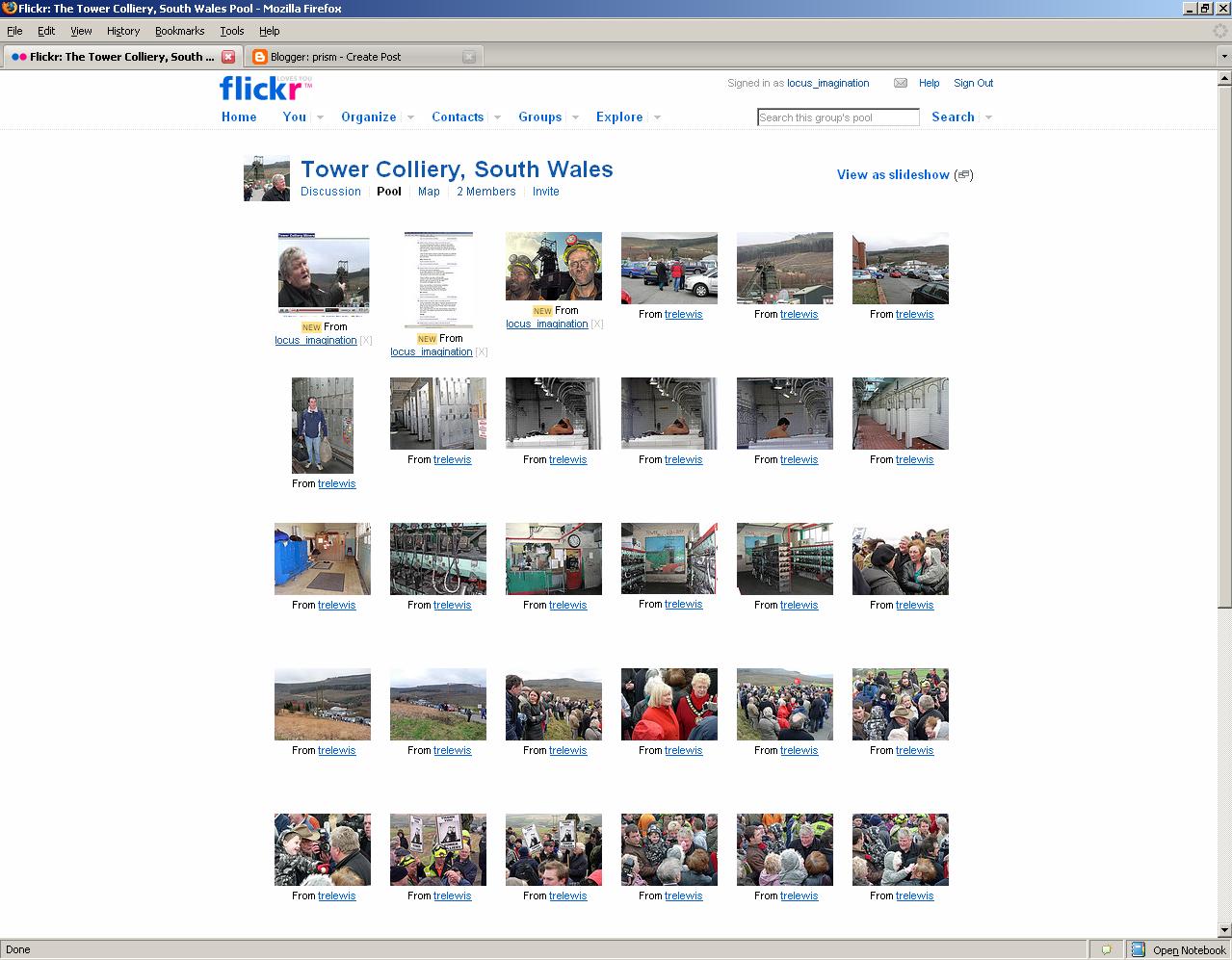
Flickr: Tower Colliery, South Wales

Tower Colliery - the last deep mine in Wales closed on Friday 25th January 2008 (...)


Flickr: Tower Colliery, South Wales


"(...) Tower closed. And so – led by no band, but instead walking heads up to the continuous applause of a large crowd lining the way – the men marched on Friday away from the pit.

"Silence was right because everyone has memories," affirmed Tyrone O'Sullivan (...)". [ x ]


"Finally, though, the coal has run out and yesterday the Tower miners, together with wives and families, gathered and marched away from the pithead. In a biting wind that howled off the Brecon Beacons, they reached the end of the pit road, turned, and tipped their union banner towards the mine in tribute.

It was a time for memories, good and bad (...)". [ x ]


"We've created a workers' owned company ... We've mined the last ounce of coal, so that makes us so proud ... "

"The last wheel then, will be the last wheel to turn in the South Wales mining area ... "

"Our final tribute must be to that pit there".

[ Tyrone O'Sullivan - Tower Colliery Miners, YouTube]


Sunday, January 20, 2008

Rheingold, On Habermas

Habermas blows off question about the Internet and the Public Sphere
November 5th, 2007 by Howard Rheingold

"I recently asked Jurgen Habermas in a public forum what his current opinion is about the state of the public sphere, now that the broadcast era has been supplanted by the many-to-many media that enable so many people to use the Internet as a means of political expression. He blew off the question without explanation, and a little further investigation into the very sparse pronouncements he has made in this regard has led me to understand that he simply does not understand the Internet. His ideas about the relationship between public opinion and democracy and the role of communication media, and the commodification and manipulation of political opinion via public relations, are still vitally important. But I think it’s important now to build new theories and not simply to rely on Habermas, who is signalling his ignorance of the meaning of the changes in the infosphere that have taken place in recent decades. He did his part in his time, but the ideal public sphere he described — a bourgeois public sphere dominated by broadcast media — should not be taken as the model for the formation of public opinion in 21st century democracies. Some background on my interest in this subject and Habermas’ personal opinion follows. And then I’ll briefly describe my recent encounter with the man himself".

(...)

Saturday, January 19, 2008

American scientists awarded Japan Prize

upiasiaonline.com | January 18, 2008

TOKYO, Japan, The Science and Technology Foundation of Japan announced three winners of the 2008 Japan Prize Wednesday in Tokyo. All three laureates are American scientists engaged in Internet technology and medical genetics.

The Japan Prize is awarded to people whose original achievements in science and technology are recognized as having advanced the frontiers of knowledge and served the cause of peace and prosperity for mankind. Each laureate receives a certificate of merit, a commemorative medal and a cash award of 50 million yen (US$468,000) in each prize category.

The Japan Prize "should reveal a history showing both scientific and technological progress and the resultant history of peace and prosperity," says Hiroyuki Yoshikawa, chairman of the Science and Technology Foundation, a non-profit foundation affiliated to the Cabinet Office, the Foreign Ministry and the Ministry of Education, Culture, Sports, Science and Technology. The foundation has awarded the prize to 63 recipients in the last 23 years.

Each year, two categories are designated for the awards. This year's awards were selected from the categories of information and communication theory and technology and medical genomics and genetics.

Already known as "fathers of the Internet," Dr. Vinton Gray Cerf, vice president and chief Internet evangelist for Google Inc., and Dr. Robert Elliot Kahn, chairman of the Corporation for National Research Initiatives, received an award for the creation of network architecture and communication protocol for the Internet.

In the course of their efforts, they proposed the concept of open architecture as a way to meet the need to connect diverse devices to a network. Also in order to realize this concept, they created the TCP/IP protocol used in today's Internet, presenting it in a co-authored paper published in 1974 in a leading technical journal. Based on the results of their early research, they jointly developed the Internet's communications protocol.

The foundation said that thanks to their work, a social network, unprecedented in human history, had come into being, people's living space had been enormously enlarged, and the most important foundation for sustaining globalization had been laid. Thus, these two pioneers played a decisive role in the evolution and advancement of modern culture and society.

Another laureate, Dr. Victor A. McKusick, also respected as the father of human genetics, received his award for the establishment of medical genetics and contributions to its development.

With the completion of the human genome project, we have come to understand almost all of the genetic information contained in DNA, which is encoded in a series of letters. However, we are still some way from fully identifying those parts which are related to the treatment of diseases.

The foundation commended McKusick for spending over half a century compiling knowledge on genetics, and advocating the importance of the formulation of a genomic map for genetic disorders. Today, researchers and clinicians around the world are sharing the fruits of McKusick's labors, which have become indispensable to the world of genetic medicine.

Thursday, January 10, 2008

BT bets its future on broadband

BT's Ebbsfleet fibre trial announcement-

1) as covered by the Guardian, 2) the real story behind the announcement from the FT- Minister Timms stands down, 3) some further details.

A significant move towards an open access model... and the reality of the market, investment, and failure of a government NGN/fibre policy.


1) Richard Wray, communications editor | The Guardian, Thursday January 10 2008 | BT bets its future on broadband 20 times faster than now · Openreach to install fibre system at Ebbsfleet · Kent Network will rival those of Japan, Korea and the US

2) ft.com | Pressure off BT over superfast broadband
BT would not be forced to invest billions of pounds in a national, superfast broadband network, ministers said last night, as the company outlined tentative plans to accelerate broadband speeds hugely.
The government's move is likely to be greeted with relief by investors, who feared it had been pressing BT to spend £15bn or more on a fibre-optic network connecting all homes. (...)

3
more details --
http://www.lightreading.com/document.asp?doc_id=142850


More: news

Related: Ofcom launches fibre-access consultation

~~~~~~~~~~

bbc | Last Updated: Tuesday, 29 January 2008, 14:04 GMT

'There is no Ebbsfleet'

A £2m, 50-metre sculpture has been commissioned to represent the huge regeneration scheme in north Kent. The BBC's David Sillito visits the site and asks whether it will live up to its grand ambition.

"There is no Ebbsfleet, it's a train station and that's it. That's all Ebbsfleet is. There is no Ebbsfleet".

(...)

In the past they might have just built some houses and left it at that, nowadays the buzz phrase is "placemaking" and that involves trying to create the intangible things that turn a place you live into a place you care about.

"You can't make a community. Community comes from the heart. All we can do is give it the best start possible."

And a 50-metre piece of art will help?

"Oh, I think all sorts of things have a very important role to play in that but certainly yes, helping put Ebbsfleet on the map, giving it a sense of pride, giving it a totem."

So icon first, town second.

Building houses, you see, is easy. Building a place that people care about is rather harder


Sunday, December 23, 2007

Peter Cochrane's Blog: Christmas wish list

silicon.com | 14.16 Thursday 20th December 2007

Every year of my life seems to have been challenging for one reason or another. But I have always been able to stay ahead of the game and keep on top of technology and business.

In the early days the hardware and software involved was well beyond the pocket of private individuals. Only giant corporations could afford the 100T computers that consumed kilowatts of power and acres of floor space.

These mighty machines have long been eclipsed by PCs and other devices that fit the bag, pocket or hand, consume a few watts and provide each of us with massive computing capabilities at vanishingly low prices. Adequate PCs and laptops are now hitting the $400 break point and all the associated peripherals come at inconsequential cost.

For decades my Christmas wish list has presented a viable spending opportunity - but not this year. To continue making progress and keep ahead of the game, I need things that are just not available.

Number one on my list is bandwidth, and throughout the Western world it just isn't there. I have to go east to find a world of satisfying connectivity and associated creativity. Number two is my need for a machine intelligence that helps me understand system and business complexities and guides me to better decision making.

(...)

OFCOM | NGN Responses

OFCOM | Responses to consultation: Next Generation Networks - Future arrangements for access and interconnection


(...) Having an Open Access Infrastructure (OAI (a dark fibre network open to be
used by any service provider)) could be important to areas where there is
limited competition at a wholesale level. BT at present has SMP in the UK
when considering leased lines and Internet access backhaul services. OAI
networks can open up the wholesale competitive market, drive down the price
customers have to pay and open up the market in general to many new and
innovative services based on a number of technologies used to light the fibre
pairs


See also:

  • 26/09/07 - Intellect response to Ofcom Consultation on 'Future Broadband - Policy Approach To Next Generation Access' (pdf 33KB)

Question 5: Do you consider there to be a role of direct regulatory or public policy intervention to create artificial incentives for earlier investment in next generation access?
It seems to be very doubtful that the market alone will result in the deployment of NGAs that give full UK coverage. Also, market forces will result in deployment to the most attractive areas in advance of those offering lower returns. Also the sheer scale of the engineering project to deploy NGA technology across the UK will inevitably mean that the services are delivered to some areas later than others. So with or without some form of intervention, there will be some people who get access to NGA later, possibly very much later, than others and without intervention there will be those who never get access to NGA. The issue then is one of inclusion and the extent to which a digital divide, temporary or long term, is acceptable. This is really a policy rather than regulatory matter. However it seems reasonable to conclude that, if a digital divide is not accepted, then intervention will be needed at some point.


Ofcom | Press Release | 26|09|07 | Ofcom considers fast broadband outlook and pledges clarity for investors

Ofcom today published a consultation paper analysing the outlook for future broadband “Next Generation Access” (NGA) networks with proposals for future regulation of this new communications infrastructure.

Regulation has contributed to an effective broadband market in the UK.

Broadband access regulation is based currently on creating and supporting a competitive market capable of delivering a range of services from a variety of providers, spanning many price points and available throughout the UK.

Broadband has become a mass-market service, with providers other than BT offering services over 3 million unbundled broadband lines and Virgin Media offering a service to 50% of the country over cable. Consumers have enjoyed falling prices, rising speeds and increasingly innovative product bundles.

In general the picture for broadband take-up in the UK is good:

* over ninety-nine per cent of the UK is connected to a broadband enabled exchange;
* over half of UK households have taken up broadband;
* almost three quarters have a choice of at least two broadband (ADSL and/or cable) network providers;
* the average headline speed has doubled in a year to reach 4.6mb/s and
* broadband prices have fallen by 9% in the last twelve months.

(...)

Regulatory clarity needed to support investment in NGA

As the market evolves, a clear regulatory regime supporting its growth will be key. Its aim will be to ensure that consumers continue to enjoy all the benefits of a competitive and dynamic market and that potential investors have clarity on how their investment will be regulated.

Ofcom proposes to play its part in facilitating timely and efficient investment in very high speed broadband networks with a regulatory policy based on the same principles it established for current generation broadband. Of particular relevance are the principles to:-

* promote competition at the deepest possible point in the broadband value chain, to optimise the opportunities for innovation and sustainable competition
* optimise the scope for innovation to maximise consumer and business benefits from these new services; and
* require equivalence where operators with market power must make their network infrastructure available to their competitors on the same basis.

In addition Ofcom proposes two new principles specific to next generation access networks:-

* regulation must reflect the significant commercial investment risk associated with deployment of these networks in order to ensure incentives for investment are retained; and
* investment in these networks requires regulatory clarity. It is important that the regulatory regime remains in place for a sufficient time to allow investors the long-term clarity they need to invest with confidence.

Ofcom CEO Ed Richards said: “Next Generation Access offers tremendous new opportunities for UK business and consumers, and its potential impact on the economy is very significant.

He added: “Investment in Next Generation Access will represent a substantial commercial risk and the market should decide where and when it will be made. We want to ensure there are no barriers to investment and provide a clear regulatory environment which will help encourage investment.

“But we also want to ensure that the benefits of competition which consumers have enjoyed with current generation broadband can also be achieved as we move to higher speed next generation access.”

The consultation closes on 5 December 2007.

The full consultation is available online at http://www.ofcom.org.uk/consult/condocs/nga/

Government mulls broadband help

bbc.co.uk | Last Updated: Wednesday, 19 September 2007, 07:27 GMT 08:27 UK


The UK government is considering intervening in the way broadband is rolled out, in an effort to speed up the deployment of super-fast services.

Stephen Timms, Minister for Competitiveness, ordered a summit to look at the role of government in providing next-generation broadband.

While other countries are investing in new ways to deliver higher bandwidth, the UK is seen as lagging behind.

Mr Timms said broadband infrastructure was one of his "personal priorities".

"Today we face a new challenge. Other countries are starting to invest in new, fibre-based infrastructure, delivering considerably higher bandwidth than is available in the UK today," Mr Timms told the Broadband Stakeholder Group and others attending a meeting on Tuesday evening.

"I have decided to chair a high level summit later this year to consider the circumstances that might trigger public sector intervention and the form that intervention might take," he said.

Huge costs

The event was organised by the Broadband Stakeholder Group to outline its own plans to improve the way next-generation broadband is rolled out in the UK.

According to Richard Allan, a member of the Broadband Stakeholder Group and director of government affairs at Cisco, the UK needs to act now in order to keep its place in the top 25% of broadband nations.

"That should be one of the targets that the government sets if it wants to stay economically competitive," he said.

Mr Allan believes that the UK should have 40% of its citizens connected to fibre that can deliver broadband speeds of up to 100Mbps (megabits per second) by 2012.

"The current copper-based system is limited by ADSL which means 24 megabits under very good conditions," he said.

It is estimated that upgrading the whole of the UK to a fibre-based network could cost £10-15bn.

While other countries, including France, Germany and Italy are already looking at ways of improving the so-called access or last-mile network which connects to people's homes, there is so far little investment in the UK.

Sewer
UK sewers may not be suitable for fibre

According to Mr Allan, the reasons for this are part-historical.

"There is evidence that the cost of civil engineering work in the UK is particularly high," he said.

He believes government intervention in lowering these costs as well as help with planning laws and providing the necessary ducting for fibre would be a step in the right direction.

In some countries ducts for fibre have been made available via municipal sewers although Mr Allan is not sure this is the solution in the UK.

"Traditionally UK sewers are deeper and they are not municipally owned but there are other ways to keep the disruption of digging up roads to a minimum, for example with micro ducts which sees fibre blown through long runs," he said.

The BSG is also calling on Ofcom to provide a regulatory framework to support investment in next-generation networks.

Ofcom looks to future of fast net

Last Updated: Wednesday, 26 September 2007, 14:22 GMT 15:22 UK

Regulator Ofcom has added its voice to the growing debate about how the UK should roll out super-fast broadband.

It has launched a consultation, running until December, to probe ways to keep UK net services up to speed with those of other nations.

Current broadband speeds have a natural limit which are unlikely to satisfy growing consumer demand for bandwidth.

In other countries, networks delivering speeds of up to 100Mbps (megabits per second) are already being rolled out.

Some experts are concerned that the UK is falling behind its competitors. Last week Stephen Timms, Minister for Competitiveness, ordered a summit on the issue and did not rule out the possibility of public sector intervention.

The debate centres on the question of whether the UK should put in place a nationwide fibre network and, in its consultation, Ofcom lays out some of the options for the UK as well as suggesting ways in which such a network should be regulated.

So-called fibre to the kerb would offer speeds of up to 50Mbps and cost up to £10bn to roll out nationwide, experts predict.

Fibre to the home is more expensive - with an estimated £15bn price tag - but offers speeds of up to 100Mbps.

Ofcom points out that no one technology will answer the needs for more bandwidth. Cable networks will also play an important role in offering high-speed net access and Virgin Media is already trialling speeds of up to 50Mbps.

Controversy

BT openreach van
Would BT monopolise next-generation access?

As new applications such as net TV become popular so demand for bandwidth increases.

Some countries, including France, Germany, the Netherlands, Japan and Korea are already investing in fibre networks which deliver speeds of up to 100Mbps (megabits per second).

According to Ofcom, current broadband speeds in the UK reach an average of 4.6Mbps. These speeds will be increased to around 24Mbps when next-generation ADSL - named ADSL2+ - begins rolling out next year.

Ofcom's chief executive Ed Richards said that super-fast next generation access was an obvious next step, offering "a fundamental change to the country's infrastructure" and one that would affect how competitive the broadband market was "for years to come".

In its consultation, Ofcom is keen to stress any new network will be regulated in the same way as the existing copper-based access network. This would mean that it would have to be open to all operators, just as BT is forced to make its current network accessible to rivals.

BT, which is already investing heavily in upgrading its core network, said that it would look at fibre "where it makes commercial sense".

"BT welcomes the chance to discuss this issue with Ofcom, the government and the wider industry. We are totally committed to providing our customers with the services they want both now and in the future.

According to BT, more than 120,000 businesses already use fibre services.

Ofcom has not ruled out the possibility that rivals to BT such as CarPhoneWarehouse might consider building a fibre infrastruture for the UK.

But such a big project is fraught with controversy, pointed out Ian Fogg, an analyst with research firm Jupiter.

"At the heart of it, whoever invests in a new network will want to have a return on their investment but, because the sums are so large, the return on investment period will be many years," he said.

There are also concerns that a new fibre-based network would cannibalise the existing investments that companies such as Tiscali and CarPhoneWarehouse have made in ADSL.

In Japan, ADSL is in decline as people migrate to fibre in large numbers.

"In the UK over the last three years, there has been a significant investment in local loop unbundling (a system whereby rivals can get their hands on BT's equipment to offer alternative broadband services). The question that many will ask is whether investment in a new network would undermine the LLU investment," said Mr Fogg.

New divide

A field
There is likely to be big speed differences between town and country

There are also concerns that a fibre network would only be economically viable in dense population areas such as towns and cities, creating a new and even greater digital divide.

"The UK will have to accept a difference in speed. While those on fibre-based networks could be enjoying speeds of up to 100Mbps, those on copper telephone lines will be lucky to get 24Mbps," said Mr Fogg.

Critics are concerned that the UK is falling behind other nations but Ofcom pointed out that market and infrastructure conditions in Britain are very different to those countries where investment in fibre has already been strong. This is due in part to the already-established pay TV market in the UK.

"We are not complacent and we absolutely should be concerned about it but we might have to accept that deployment will be later in the UK," said an Ofcom spokesman.

The Broadband Stakeholder Group described Ofcom's consultation as a "key milestone" in the debate about the future of the communications infrastructure in the UK but warned that the regulator may need to take a more interventionist approach if there were long delays in rolling out next generation networks.

Minister pushes broadband agenda

bbc.co.uk | Last Updated: Tuesday, 27 November 2007, 11:42 GMT


The government is to draw up a battle plan on the best way to roll out next-generation broadband networks.


It will share best practice from high-speed pilots around the UK as well as lay out the business case for future investment in high-speed networks.

The agreement came out of a broadband summit chaired by Competitiveness Minister Stephen Timms.

Mr Timms said ultra-fast broadband would be a key technology for Britain.

He welcomed Virgin Media's announcement that it will be launching a 50Mbps (megabits per second) broadband service in the UK in 2008.

"This is an important stride towards full next-generation access in the UK which I'm sure others will want to match," he said.

Broadband industry leaders met ministers on Monday to discuss how to stop the UK dropping into the internet "slow lane".

More than half of all UK homes now have a broadband connection, at an average speed of 4Mbps.

But the broadband summit heard how other countries are moving more quickly to build ultra-fast networks that can deliver speeds of as much as 100 Mbps.

BT unconvinced

See top 20 countries for broadband speed

Mr Timms acknowledged that the UK can't afford to fall behind.

"If we delay in putting this new network into place, it could be a barrier to the future success of our economy," he said.

Ofcom promised a "robust regulatory framework" to persuade companies to take up what could be a very risky investment.

It is estimated that for BT to roll out a fibre network across the UK could cost £15bn, a cost which the telco is not yet convinced is justified.

Virgin trial


Send us your comments

Speaking at a Westminster eForum event organised by MPs last week to look at the issue of next-generation broadband, Alan Lazarus, head of regulatory policy and strategy at BT, said he was not yet convinced people needed more bandwidth.

"What is the demand? What are the services that people want that take them beyond current capacity?" he asked.

He also pointed out that some of the bottle-necks of current access were in the core network, which BT is already spending £10bn to upgrade.

Also speaking at the eForum, Virgin Media's chief technology officer Howard Watson said its trial of 50Mbps had proved a user demand for such bandwidth.

It will deliver the high speed broadband - more than twice the maximum it currently offers - by the end of next year.

Virgin's 50 Mbps service will be available to more than 70% of the 12.5m homes its cable network covers by the end of 2008, the firm said.

Government cracks broadband whip

bbc.co.uk | Last Updated: Wednesday, 19 December 2007, 01:42 GMT

Broadband firms could face formal action if they fail to give consumers accurate information about the speed they will get when they sign up.

The warning comes from Ofcom as it moves to ensure that net firms do not oversell broadband in advertising.

Customers should get specific data about the speed on their line or be able to back out of the deal.

The regulator said new guidelines on the selling of broadband should come into force early in 2008.

Clear information

The warning came in a letter sent by Ofcom boss Ed Richards to the Ofcom Consumer Panel in response to its work with broadband suppliers on the advertising and selling of high-speed services.

(...)

In his response Ofcom boss Ed Richards backed the consumer panel work and said it was talking to the broadband industry about how best to implement the recommendations.

The result of these discussions should be made public early in 2008, he said.

"We are keen that any measures are implemented in the shortest time frame possible," said Mr Richards. "At this stage, we have not ruled out the possibility of using formal powers if we consider it would be more effective in delivering our objectives."

A spokeswoman for Ofcom said that currently the regulator had no powers to enforce the new arrangements on the selling of broadband but would seek them by beefing up the guidelines net firms must abide by.

"This is a considerable consumer issue we are concerned by," said the spokeswoman. "We think consumers should get what they pay for. It's an important decision for them."

Queen launches YouTube channel

bbc.co.uk | Last Updated: Sunday, 23 December 2007, 00:09 GMT

The Queen has launched her own channel on the video-sharing website YouTube.

The Royal Channel will feature her Christmas Day message as well as recent and historical footage of the monarch and other members of the Royal Family.

The launch marks the 50th anniversary of the Queen's first televised festive address in 1957.

The palace said it hoped the site would make the 81-year-old monarch's annual speech "more accessible to younger people and those in other countries".

Changing times


The opening page of the channel, which went live just after midnight, bears the title "The Royal Channel - The Official Channel of the British Monarchy" and features a photograph of Buckingham Palace and the Queen's Guards.

This year's festive address will appear on the site at about 1500 GMT on Christmas Day.

Back in 1957, when the Queen delivered her first television message, she acknowledged the need to adapt to changing times.

"I very much hope that this new medium will make my Christmas message more personal and direct," she said from her Sandringham estate in Norfolk.

"That it is possible for some of you to see me today is just another example of the speed at which things are changing all around us."

(...) Announcing the launch of the channel, a spokeswoman for Buckingham Palace said the Queen "always keeps abreast with new ways of communicating with people".

"She has always been aware of reaching more people and adapting the communication to suit," she said.

"This will make the Christmas message more accessible to younger people and those in other countries."

The Royal Channel can be viewed at www.youtube.com/theroyalchannel and the Queen's Christmas message can also be downloaded as a podcast from www.royal.gov.uk.